

THE 8 PATHWAYS: PATHWAY 3
Corrections
These toys apply directly to work in prisons and with preparing inmates for life outside of prison, hoping to improve the percentage that can put their life in order and keep it there. This involves using Hermes’ Web and tools to teach self-regulation and allow one to make wiser, informed choices than previously in their lives. Successful re-entry requires men who can recognize and claim their pathologies, learn to manage them, and build a regulatory relationship with their demons. Our toys personify those demons and allow clients to objectify them rather than be possessed by them. It also helps break the stigma of feeling the word identifies them with that demon and sees nothing else.
-
We sell copies of Theodor Millon’s DISORDERS OF PERSONALITY: DSM-IV & BEYOND, probably the greatest resource ever for working on trauma, criminality and accountability. A text many clinicians own but have never read.
Watch a few episodes of Dr. House.
Visit our blog on Demons on this web site.
-
Dr. House from the TV series is the best role model for dealing with inmates’ pathologies. Correct diagnosis via the MCMI-IV makes a huge difference in results & cooperation in terms of change and accountability. It can paint a picture of a client’s internal landscape. Dr. House proves the importance of specificity of diagnosis. Most inmates are not primarily antisocial per our research. In fact, antisocial is only the 4th most prevalent elevation. See our testing article due out January 2028 on our web site.
*Idea: The 3 C’s: are you 3rd eye blind or do you C: conscience, community, compassion. The 3rd eye is the eye of the soul. When the 3 C’s come from the core, they can not/do not discriminate: true conscience, community, or compassion can not apply itself to only friends or family and deny it to others for various reasons. It is or it ain’t: otherwise it’s only a façade.
The Missing Pieces
Criminals have missing pieces in their development, and we designed a program and a diagram for working on those missing pieces. It involves the Web & Hoberman, many toys, movie clips, discussion and worksheets. It can’t restore all the missing pieces, but it can help identify and manage the deficiencies.
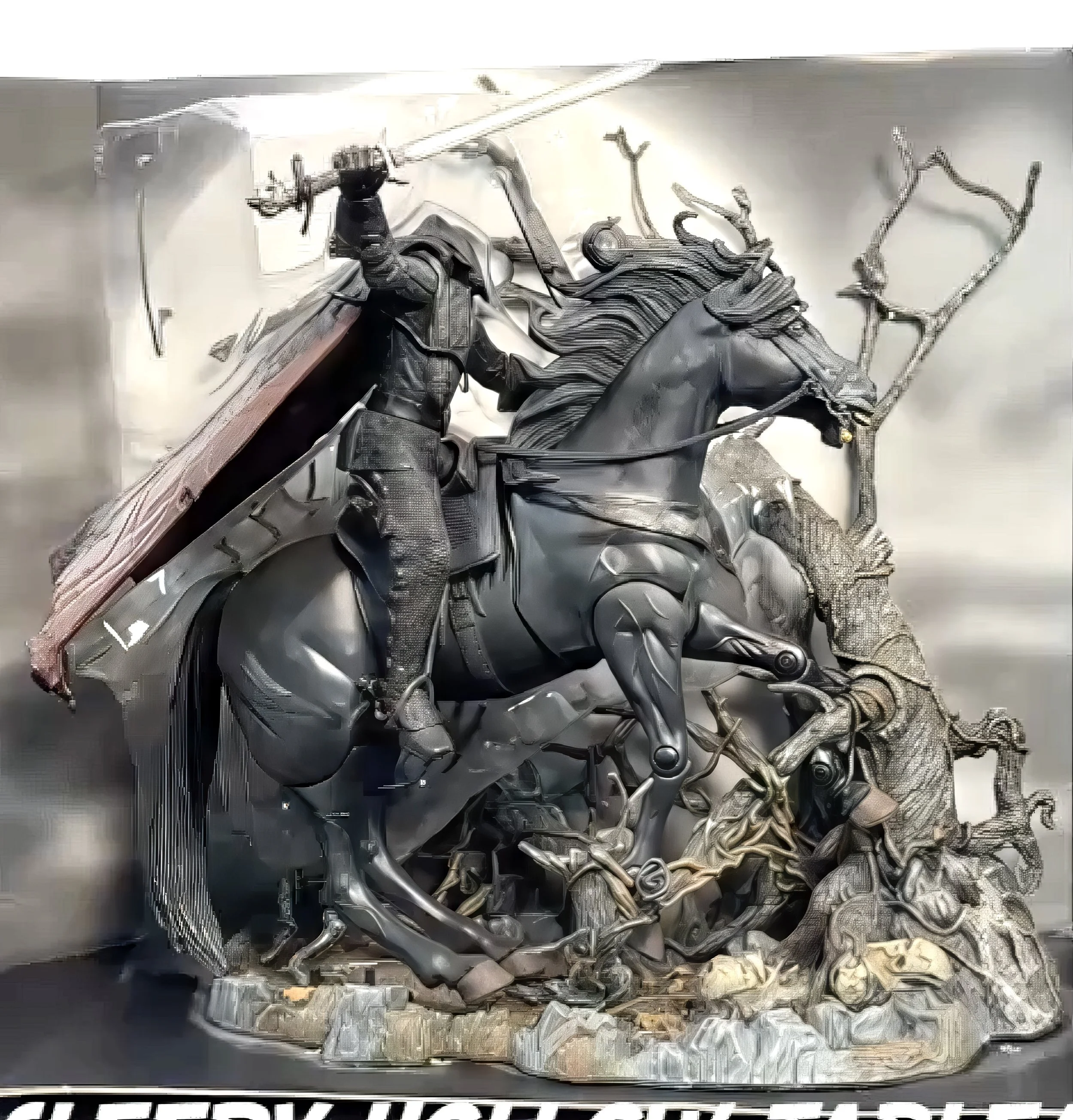
Quick Overview: This tableau shows where trauma goes when it's buried — invisible, but still driving behavior until someone digs for the root cause. Useful for illustrating why symptoms keep repeating until the underlying story is uncovered.
This toy shows the home/hidden reality/grave of the Headless Horseman. Once he is down there, horse and all, he is invisible - out of sight/out of mind, except for the growing terror of the villagers who see one person after another picked off and beheaded. The villagers just want it to stop.
When trauma is suppressed/repressed/buried in the core, it can be invisible. The only evidence is what actions take place now and then, if they are visible and not hidden themselves (like addiction, sex offending before apprehension, cutting or eating disorders). The story just keeps repeating itself until someone takes the time to figure out the root of the disorder/affliction/crime/horror.
Getting at the roots is a lot more difficult, a lot messier, involves more investment and time. You also have to ask the right questions. For example, many prisoners are there because of what is considered antisocial behavior and/or an antisocial personality disorder. That's what it looks like, smells like, plays out as. However, if one administers the MCMI-IV for instance, you may discover, as often as not, that what looks like Antisocial Personality DO is actually an amalgam of the Negativistic, Avoidant and Sadistic elevations, each of which requires a particular approach to treat or counteract. It bring to mind the TV show HOUSE: the disease of the episode is often mistaken for various other illnesses until someone discovers what it actually is. Prior to that discovery, some of the treatments make it worse, sometimes much worse to the point of almost being fatal. Other remedies do nothing at all. Precision is called for - mapping out the territory - figuring out exactly where you are and what the recipe was for making this particular concoction that is so volative and malicious!!
That precision is often missing today in treatment. The story never gets heard, the root is never addressed. We miss the boat. Once you realize that, it’s time to spend a month on a remote island reading Millon’s Disorders of Personality: DSM-IV and Beyond!

Quick Overview: This figure uses the classic trickster archetype to open a conversation about deception — from harmless mischief to the malicious scams and manipulation common online today. Useful for counselors and teachers discussing boundaries, media literacy, and the difference between playful trickery and predatory dishonesty.
Then we have Bugs Bunny - the trickster. Not a monster - just monstrously annoying. "What's up Doc?" was his mantra! He has the ability to be everywhere - you can't escape him. And he is always smiling, peering, interfering! More of a clown than Pennywise in the sense of being entertaining or doing tricks!
Tricksters abound on the internet and many are malevolent: creating AI false images, scamming, pretending to be someone or something in order to gather money from unsuspecting others. These are tricksters with no moral boundaries and only a desire to harm, confound and dismay, not to mention rob and cheat and steal and slander.
Bugs Bunny can be cool, graceful, flippant, insouciant, aggressive, arrogant and thuggish depending on the situation and his particular incarnation. Sometimes Bugs-the Trickster is a fun-loving, feisty personality, other times controlled or a city slicker. At times a tormentor and audacious. Bugs Bunny is quite a combination and kaleidoscope of traits, just like the clown: a spectrum with merriment on one end and terror on the other. And on a personal note: how does he eat all those raw carrots? Couldn’t do it!
THE JESTER ROLE: Bugs Bunny also brings in the role of the jester: the creature who tempers the autocrat and the psychopath, who typically lack any sense of humor. The jester is a trickster and a master of legerdemain. The cunning is put to good use as it benefits the entire kingdom, the entire nation. It puts outer rails on the domain of the ruler, but does it with humor and misdirection, but in such a way that those who witness it know the ruler is being managed, constricted, made consistent with the rule of law even though the rule is typically unconscious of the benefits of rule, outside his own rules, that is!
Damage Control
This program focuses on inmates taking responsibility for the damage to their core/soul and working on decontamination. This approach utilizes the MCMI-IV to determine the types and extent of damage to the core; then focuses on educating clients so they’re able to make informed choices based on their deficits. This also aids clinicians in designing effective interventions.
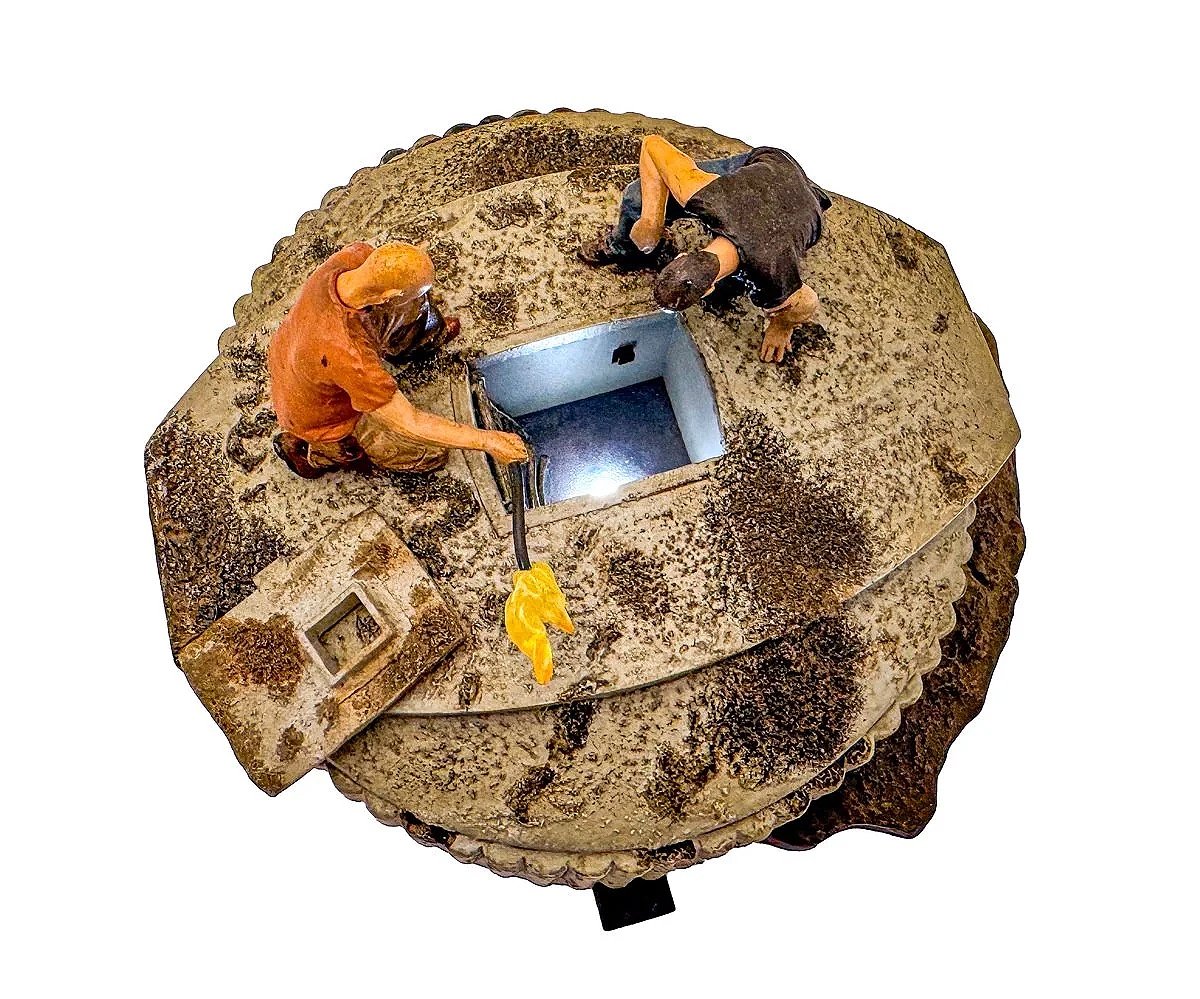
Quick Overview: Also drawn from Lost, The Hatch represents how much work it takes to access what's locked away inside us — and the fear of what might be found. Useful for discussing resistance to therapy and the process of "derepression."
If you watched LOST, the TV series, you know It took tremendous work to open The Hatch: old dynamite explodes, killing the workers. Toppling trees won’t budge it. Finally, The Hatch is opened. Inside is a ticking mechanism and they wonder if it will bring an end to the world if interfered with. We all have such a Hatch – our hidden world, which is often locked tight, even for ourselves. LOST, the TV series, is rife with father issues, which is exactly what locks up that inner world and infuses it with fear. It needs to be opened, and then explored, and rid of crippling, destructive booby traps as well as the infused threats from authority figures that often lurk in our chromosones!
Dr. Harold Searles, a famous Psychiatrist, coined a term - derepression. It refers to the need, and the process, by which all the anger, resentment, fear and other emotions stored and locked up in a person can be decontaminated. Too often as we grow up, we are encouraged to “eat it” - to eat the shit, to swallow the shit.
Derepression is typically caused by “eating shit”- internalizing negativity from others when you have no other resource - they’re bigger, stronger, in control, threatening your life or livelihood or freedom! If you eat shit, you eventually become full of shit. Once you’re full of shit, you can’t take no more shit. Once you can’t take no more shit, you start giving other people shit. And so it goes……….. Eating shit happens when the people around you are abusive and domineering and you are unable to leave the situation or effectively protest against it. Bullies make people eat shit, but likely because they’re already full of shit from eating too much shit earlier in their own lives, maybe in an ongoing manner!
As abused people grow up, many of the authority figures in their lives - teachers, ministers, parental — can’t deal with their anger and shut it down, make them eat it. Once they get to therapy, it can happen again if the therapist doesn’t understand the need for validation of the anger and the processing of it. Otherwise the fire just continues to burn and the taste of shit never leaves the mouth. Sometimes these people keep getting passed on, year after year, without getting the help they truly need.
Caution is often important because people often don’t know how to handle the emotions they’re stored up and locked up inside. Yet this is THE HATCH! Hard to open! Scary to enter and explore. Hard to understand what’s in there or what to do with it.
This is where the Spiritual Warrior comes in! The ability to handle the anger as it emerges without needing to retaliate or ask the person to stuff it back in or disqualify the anger. A Spiritual Warrior has the capacity to protect itself, to strike back, but is able to choose not to when they understand the nature of the anger.
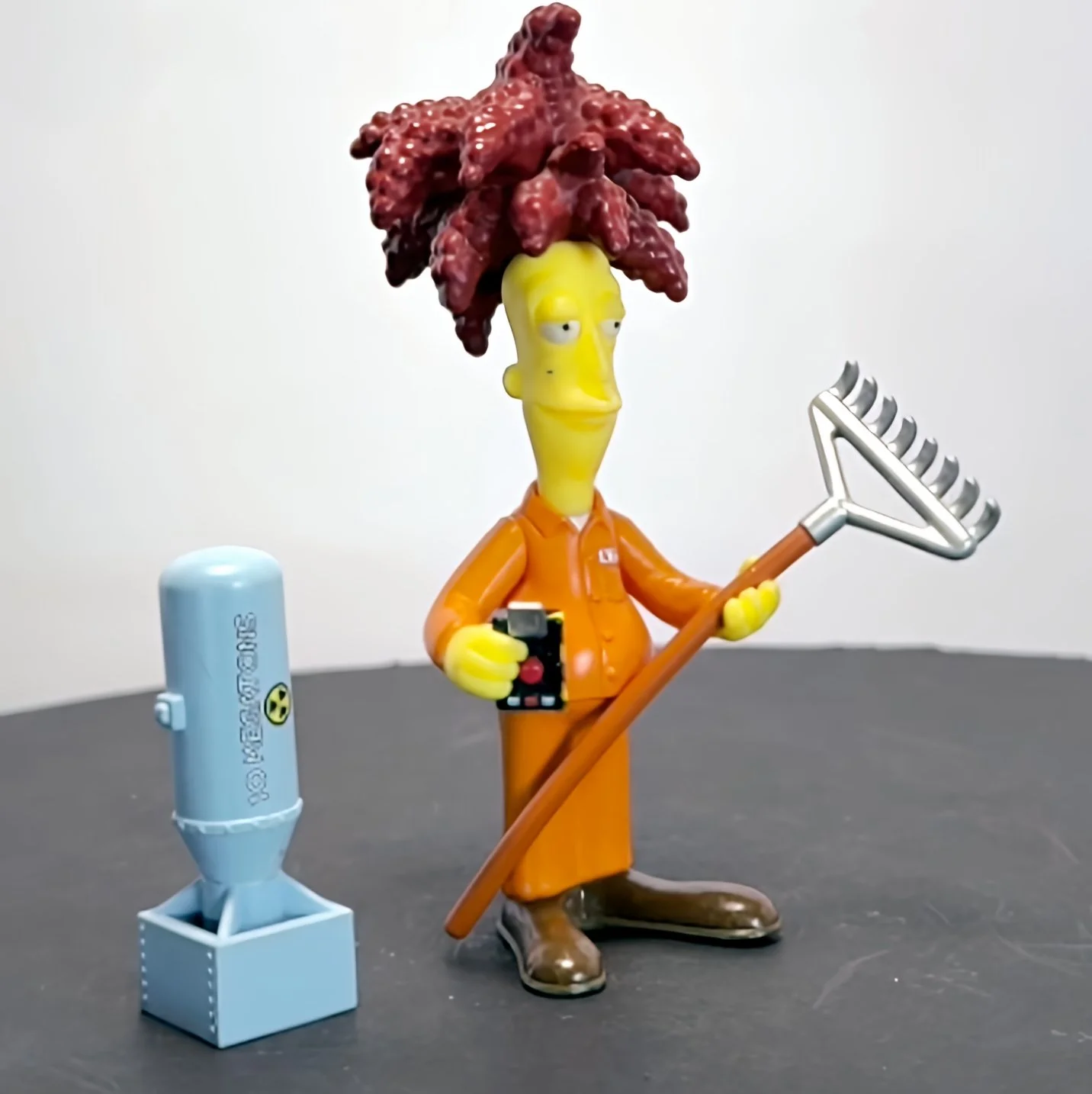
Quick Overview: Based on a cartoon villain, this figure represents inmates with nothing left to lose — unpredictable, unremorseful, and dangerous precisely because consequences no longer register. Useful for corrections and forensic staff discussing risk assessment and the psychology of high-risk offenders.
Sideshow Prison Bob is like The Joker in the Dark Knight Batman movie – nothing is sacred to him, any impulse will do, any pain or trauma he carries only fuels his carnage.This character carries a nuclear bomb with him (pain from his nuclear family waste most likely) and a detonator.And his rake from his prison job!He’s a madman, resplendent in his mad plumage (mostly orange but with puffed up hair), and willing to blow up anything, anywhere, anytime, with no remorse.When I worked in the prison, I called these guys GFUs: gloriously f’d up!The older prisoners hated them because they ignored the prison code and made the older guy's life sentences much more miserable.But, their numbers were growing, as is the amount of violence inside the prison against inmates as well as guards. They have nothing to lose - death doesn't scare them off. If they go out, they want to go out with a bang! They don't want to disappear into a bottle or the haze of morphine or fentanal - they want to be visible and larger than life!
Personality Disorders
The MCMI-IV is essentially a psychological x-ray. It reveals what pathologies, monsters, or demons will activate under stress and pressure or while intoxicated.

Quick Overview: This set uses classic movie monsters to approximate major personality disorders from the DSM-5, giving clients and students an easier, less clinical way to recognize patterns and "modes" of behavior. A useful teaching tool for courses or trainings on personality pathology.
These well-known monsters approximate the features of many of the main personality disorders listed in the DSM-V or in Theodore Millon's MCMI-IV and his incredibly in-depth writings about the various disorders and their origin, subtypes, and consequences.. The toys are an easier way to approximate and discuss personality disorders and their symptoms and syndromes! They can also represents "modes" that clients get into at times - states of mind & behavior that are problematic. Clients can also read up on the lives of these creatures and may find a lot to identify with and also understand why, when they're in those modes, people tend to keep their distance.
The Hunchback of Notre Dame is the embodiment of Hermes in these sets. He is really at the center, representing the core and the connectness between all the elements, similar to Hermes' role in the Greek and Roman pantheons.
The Universal monsters are available in the large 9-figure colored size ($75), or the extra-large 15-figure size ($90), which is in black-and-white.
When you purchase this set, we will email a guide document to you to assist in your explorations.
If you're planning to be marooned on an island any time soon, I recommend you go on-line to Amazon or Half-Price Books and purchase a used copy of Millon's Disorders of Personality: DSM-IV and Beyond. You can get it cheap, as when the DSM-V came out, many clinicians dumped this book, often unopened, because it has DSM-IV in its title and thus was outmoded and useless in their minds. If only they had opened it and found the wealth and world of knowledge hidden inside. There’s a DSM-III version also available used, that is even cheaper, but has most of the same material on personality disorders.
Explore More Pathways
Pathways
Professional
Shortcuts